




The most important information at a glance
-
Nail biting is widespread – often due to stress or habit.
-
It can affect the appearance of the nails and may be associated with health risks.
-
With targeted care, mental mindfulness, and supportive routines, the behavior can be changed gradually.
Why do people bite their fingernails?
Nail biting is a habit many of us are familiar with, affecting people of all ages . It's often more than just a nervous tic and can have various underlying causes . To better understand this behavior , let's look at what might be behind it.
Causes and triggers at a glance
Sometimes it's simply boredom, sometimes there's more to it. Here are some reasons why people bite their nails :
-
Stress and anxiety: In stressful times, many people look for small ways to calm themselves. Biting one's fingernails can seem like a quick solution in such moments. It offers short-term distraction and a feeling of control in uncertain situations.
-
Boredom: Sometimes it's simply boredom that makes us bite our nails. In moments when our hands have nothing to do, biting can be a kind of automatic reaction to keep ourselves occupied.
-
Habit: Some of us bite our nails without really thinking about it. Over the years, it has developed into a ingrained habit that is difficult to break.
-
Emotional problems: Emotional turmoil, unprocessed feelings, or traumatic experiences can lead people to bite their fingernails. It serves as a form of self-soothing and a distraction from inner conflicts.
- Restrictive environment: Children and adolescents who grow up in an environment where they cannot express their emotions sometimes use nail-biting as a release. It becomes a silent form of protest or self-expression.
Diseases associated with this symptom
While nail biting is often dismissed as a harmless habit, in some cases it can be a symptom of more serious health problems. It is important to recognize these possible connections and seek medical advice if necessary.
✘ Mental health disorders: Constant nail biting can be a symptom of underlying mental health problems. It can be a sign of anxiety disorders or obsessive-compulsive disorders, where repetitive behaviors serve as a coping mechanism.
✘ Paronychia: Constant biting and injury of the nail bed can lead to paronychia, a bacterial or viral infection. This infection can be painful, cause swelling, and in the worst case, lead to further complications.
✘ Warts: Chewing can create small wounds that are entry points for viruses. These viruses can cause warts, which are not only unpleasant but also contagious.
✘ Nail fungus: The constant moisture in the nail bed from saliva creates an ideal environment for fungi. Nail fungus can cause the nail to become discolored, thickened, and brittle. It is important to treat such infections early to avoid further complications.
If you notice changes to your nails and suspect that nail fungus might be the cause, it's worth taking a look at our guide on the topic: Treating nail fungus: symptoms, remedies and tips
Stop biting your nails: Helpful methods at a glance
Nail biting, also known as onychophagia, is a widespread habit that often begins in childhood and can continue into adulthood.

Here are some strategies that can help stop nail biting:
Step 1: Become aware of nail biting
Before you try to stop biting your nails, it's important to become aware of the habit. Ask yourself:
- In which situations do I bite my nails most often?
- Are there specific triggers that initiate chewing?
- How do I feel when I bite my nails?
- What emotions or thoughts precede chewing?
Step 2: Root cause analysis & coping
Nail biting is often linked to psychological stress and serves as a mechanism for tension relief . It can also be a symptom of mental illnesses such as anxiety or obsessive-compulsive disorders .
It is important to identify the underlying causes and find suitable coping strategies , for example through appropriate stress management .
Step 3: Find alternative behaviors
Instead of biting your nails , you can try to find alternative behaviors . A reward system can help encourage positive behaviors and reduce nail biting .
Here are some examples of a reward system:
✔ Set daily goals: For each day you don't bite your nails, you can put a star or a sticker on a calendar. After a certain number of consecutive nail-biting-free days, treat yourself to a small reward.
✔ Weekly rewards: If you manage to get through a whole week without biting your nails, you can treat yourself to something you've wanted for a long time, whether it's a new book, a trip to the cinema, or a special meal.
✔ Monthly goals: For a month without biting your nails, you can set yourself a bigger reward, such as a day trip, a new item of clothing, or a visit to the nail salon to celebrate your unbitten nails.
✔ Involve friends and family: Share your goals with your loved ones and ask them to encourage and support you. Perhaps they could even contribute with small surprises or words of encouragement when you achieve your goals.
Setting up a reward system not only encourages positive behavior, but also provides additional motivation to stay on track and finally stop biting your nails.
Step 4: Nail care
Careful and conscientious nail care can help reduce nail biting .
Expert tip: Use bitter nail polish, which reduces the urge to bite your nails due to its unpleasant taste. You can find bitter nail polish for nail biting in drugstores and pharmacies.
Step 5: Be patient
Breaking the habit of biting your nails is a process that requires time and patience . It's important not to judge yourself too harshly and to celebrate even small successes.
Remember that every setback is just a small stumbling block on the road to recovery and does not mean the end of your efforts.
With time and consistent effort, you will find that the intervals between chewing sessions become longer.
Step 6: Professional help
If nail biting is linked to deeper psychological problems , seeking professional help can be beneficial. A therapist or psychologist can help you understand the underlying causes of your behavior and provide you with strategies to stop biting your nails.
Expert advice: There is no shame in seeking support, especially if it helps improve your quality of life.
Finding alternative behaviors
Finding alternatives to nail biting can be an effective way to overcome this habit . There are various techniques and approaches that can help:
How does reaction reversal work as a self-help technique for nail biting?
Response reversal is a technique in which the undesired behavior is replaced with another , incompatible behavior . For example, instead of biting one's nails , one could
- put their hands in their pockets,
- Handicrafts such as knitting and crocheting
- or play with a stress ball.
Self-help & decoupling: How can it help you with nail biting?
Through self-help techniques and consciously decoupling trigger situations from nail-biting, one can learn not to react automatically to the urge to bite. This can be achieved through distraction or by using alternative behaviors .
For example , wearing a rubber band around the wrist, which is gently flicked when the urge to chew arises , can help to raise awareness of the behavior and interrupt it.
Another method is painting or drawing , which keeps the hands busy and prevents biting. Keeping a small notebook in which you write down your thoughts or feelings each time the urge arises can also be helpful.
What is the In-Sensu method for preventing nail biting?
The in-sensu method is a type of exposure therapy in which one intensively engages with the unwanted behavior in one's imagination without actually carrying it out.
Through this mental confrontation with chewing , within a safe and controlled environment, the associated emotions and reactions can be better understood and regulated . Over time, this can help reduce the urge to chew and sharpen awareness of one's own triggers.
Breaking the nail-biting habit: Additional expert tips
Breaking the habit of biting your nails can be challenging , but with the right strategies and tips, it's achievable. Here are some additional tips:
-
Wear gloves: Wearing gloves can prevent direct access to your nails and thus reduce biting. This can be helpful at night, for example, if you unconsciously bite your nails in your sleep.
-
Nail care: Regular manicures, for example with the Health Routine glass file , and the application of a nail serum can help keep nails healthy and reduce biting.
-
Distraction: Find activities that keep your hands busy, such as knitting or drawing, to reduce the urge to chew.
-
Stress reduction: Since stress is often a trigger for nail biting, relaxation techniques such as meditation, deep breathing or yoga can help reduce the urge.
- Raise awareness: Keep a diary of your chewing habits to identify patterns and develop coping strategies.
Bad habit or mental disorder?
For many people, nail biting is simply a bad habit they've developed over time. However, in some cases, there might be more to the persistent nail biting.
It is suspected that nail biting could, in some cases , indicate a psychological problem . Particularly when adults exhibit this behavior, it could point to deeper emotional or psychological issues in a psychological context.
Biting your nails or cuticles could also be a sign of unresolved psychological problems .
Medical help: Options and recommendations
If nail biting goes beyond a simple habit and is associated with emotional or psychological problems, it might be advisable to seek medical help.
A doctor or therapist can identify the underlying causes and recommend appropriate treatment strategies . There are various therapeutic approaches that can help overcome nail biting and manage the associated problems.
The role of professional therapy
Professional therapy can play a crucial role in overcoming nail biting . A therapist can offer techniques and strategies to reduce biting and address the underlying causes.
Furthermore, the therapy provides a safe space to talk about feelings and emotions that may contribute to nail biting.
This is how homeopathy and Schüssler salts can help.
Homeopathy and Schüssler salts are considered alternative healing methods that are said to help reduce nail biting . While homeopathy is based on the idea that "like cures like," Schüssler salts aim to balance mineral deficiencies in the body.
Both of these could be approaches to restore emotional balance and reduce the urge to chew . However, it is important to gather comprehensive information and consult an expert before using any of these methods to ensure that the chosen treatment is appropriate.
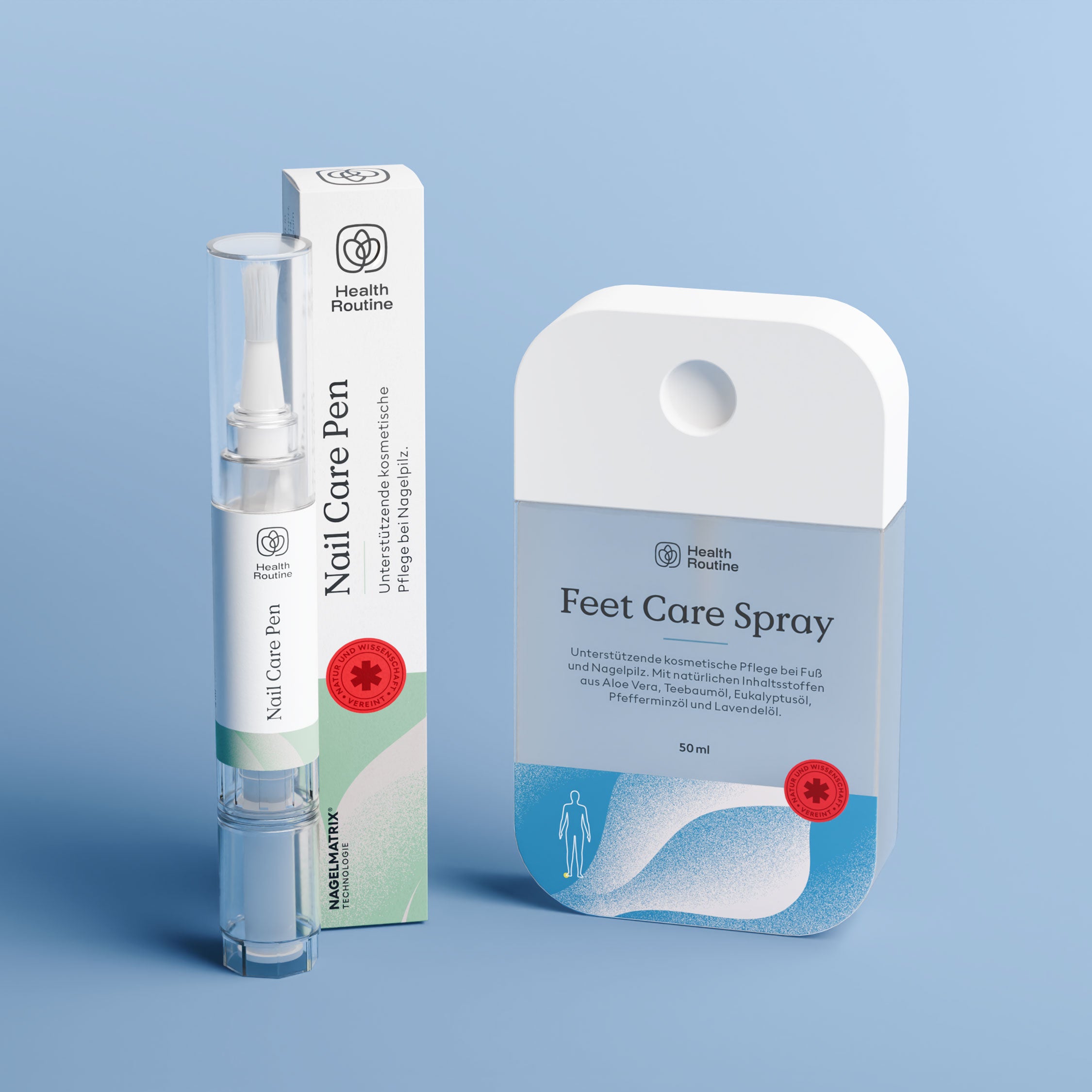
Support natural nail growth: Our insider tip - the Nail Growth Serum
Health Routine's Nail Growth Serum is more than just another nail care product. It's a carefully formulated nail oil designed to give your nails the care and attention they deserve.
This serum , ideal for both fingernails and toenails , is a fusion of the power of nature and scientific knowledge to provide your nails with comprehensive and tailored care.
Citrus oil: A natural ingredient known for its refreshing scent. In the Nail Growth Serum, this oil acts as a key, allowing the other ingredients to penetrate deep into the nail. It ensures that the serum's nourishing components reach the nail root and can take effect there.
Almond oil: This wonderful oil not only moisturizes but can also protect against the harmful effects of UV rays. It nourishes and strengthens the nail from within and can help keep the nails and surrounding skin soft and supple.
Jojoba oil: This oil is similar in composition to the natural oils of the skin. It can help nourish the nails and care for the cuticles. Its moisturizing qualities can also help revitalize dry and brittle nails.
In addition to these oils, the Nail Growth Serum contains:
Vitamin E: An antioxidant often used in skin and nail care products. It can help protect nails from environmental damage and give them a healthy appearance.
Biotin: A B vitamin often associated with the health of hair, skin, and nails. It can help support nail structure.
Olive oil: A traditional oil rich in antioxidants. It supports the nails and protects them from drying out.
Coconut oil: Another oil known for its moisturizing properties. It can help keep cuticles soft and improve the appearance of nails.
Health Routine's nail serum is not just a treatment , it's a harmoniously coordinated approach to stronger, healthier and shinier nails .
Thanks to the brush applicator, the Nail Growth Serum is easy to apply and can make the difference you want to see and feel in your nails. Give your nails the chance to shine with the power of nature!
Conclusion
Biting your fingernails can be more than just a bad habit; often it is a sign that our body and mind are seeking balance.
With the right strategies, patience, appropriate care and an understanding of the underlying causes, well-groomed and healthy nails can be within reach.
Don't let setbacks discourage you and remember that every day is a new opportunity to love and care for your nails.
FAQ
What effect does nail biting have on your nail health?
Regular nail biting can lead to various negative consequences for nail health. Bitten nails not only look unsightly, but also increase the risk of infection, as the nail bed and cuticle can be damaged.
Furthermore, chewing can cause cracks and splits, which weaken the nail further.
How can I stop my child from biting their nails?
Breaking a child's nail-biting habit requires patience and understanding. It's important to identify the underlying causes of the biting, as it's often linked to stress or boredom. Communication and creating a supportive environment are crucial.
Instead of punishing the child, you can use positive reinforcement and rewards for days when they don't bite their nails. In persistent cases, it can be helpful to consult a specialist or your family doctor to understand the underlying causes of nail-biting in children.
Nail biting: When to see a doctor?
If nail biting leads to repeated inflammation, pain, or other noticeable changes in the nails , you should see a doctor. It is also advisable to consult a doctor or therapist if the biting is associated with severe emotional stress or anxiety, and you feel unable to control it on your own.
Only a medical professional can assess both the physical and psychological aspects of the problem and give appropriate recommendations.
Remember: You are not alone in biting your nails, and there's no shame in it. It's a problem many people know and understand.
🌿 Discover more guides from Health Routine now:
Your medical advice
Our products are not intended to diagnose, treat, cure, or prevent any disease. The information provided in this article is for informational purposes only and is not intended to replace consultation with your doctor or other healthcare professional.
Furthermore, our products are not a substitute for medication or other treatments prescribed by your doctor or healthcare provider. Despite exercising due diligence, no liability or warranty is assumed for the
- Accuracy,
- Timeliness,
- completeness
- and availability of the information provided.
No legal claims can be made for any potential damages arising from the use of this information. Liability claims of any kind are excluded.